


The Control of Noise at Work Regulations 2005

What is The Control of Noise at Work Regulations 2005?
Protecting employees from excessive workplace noise is a legal responsibility for every UK employer. The Control of Noise at Work Regulations 2005 was introduced to reduce the risk of permanent hearing damage, tinnitus, and long-term occupational hearing loss caused by hazardous noise exposure in the workplace. The regulations replaced the previous Noise at Work Regulations 1989 and came into force in April 2006.
For industries including manufacturing, engineering, construction, aviation, motorsport, utilities, energy, and heavy industry, compliant hearing protection is an essential part of workplace safety
management.
The legislation applies to nearly every industry where excessive workplace noise may present a risk to hearing health.
The regulations require employers to:
- Assess workplace noise risks
- Reduce noise exposure wherever reasonably practicable
- Provide suitable hearing protection
- Establish hearing protection zones
- Provide employee information and training
- Carry out health surveillance where appropriate
- Ensure legal exposure limits are never exceeded
Why Workplace Noise Matters
Excessive noise exposure can lead to permanent hearing damage that cannot be reversed. Occupational hearing loss often develops gradually, making it one of the most common long-term workplace health issues in the UK.
High noise exposure can also contribute to:
- Tinnitus
- Fatigue and stress
- Reduced concentration
- Communication difficulties
- Increased accident risk
- Reduced employee wellbeing
The Health and Safety Executive (HSE) states that employers must take action whenever noise reaches defined exposure action values.
Workplace Noise Exposure Limits
Under the regulations, employers must act when employees are
exposed to the following daily or weekly noise levels:
Lower Exposure Action Value
- 80 dB(A) daily or weekly exposure
- Peak sound pressure of 135 dB(C)
At this level employers must:
- Assess risk
- Provide information and training
- Make hearing protection available
Upper Exposure Action Value
- 85 dB(A) daily or weekly exposure
- Peak sound pressure of 137 dB(C)
At this level employers must:
- Take measures to reduce exposure
- Provide mandatory hearing protection
- Establish hearing protection zones
Exposure Limit Value
- 87 dB(A) daily or weekly exposure
- Peak sound pressure of 140 dB(C)
These limits must never be exceeded once hearing protection attenuation is considered.
Employer Responsibilities Under the Regulations
Employers are legally required to take a proactive approach to workplace noise management.
1. Carry Out a Noise Risk Assessment
A suitable and sufficient noise assessment should identify:
- Sources of hazardous noise
- Employees at risk
- Exposure duration and intensity
- Existing control measures
- Required hearing protection
Risk assessments should be regularly reviewed, especially when equipment, processes, or workplace layouts change.
2. Reduce Noise at Source
The regulations prioritise reducing noise exposure before relying solely on hearing protection.
This may include:
- Using quieter machinery
- Installing acoustic barriers
- Maintaining equipment properly
- Isolating noisy processes
- Changing working practices
3. Provide Suitable Hearing Protection
Where noise cannot be reduced sufficiently through engineering or organisational controls, employers must provide appropriate hearing protection.
Hearing protection must:
- Be suitable for the specific noise environment
- Fit the wearer correctly
- Be compatible with other PPE
- Meet relevant safety standards including BS EN 352
Custom moulded earplugs are often preferred in industrial environments because they provide:
- Consistent attenuation
- Long-term comfort
- Improved communication
- Better wearer compliance
- Secure fit during extended use
CE Certification and BS EN352-2:2020

What Is BS EN 352-2:2020?
BS EN 352-2:2020 is the British implementation of European standards covering earplugs. It specifies the requirements for the construction, design, performance, testing, marking, and user information associated with earplugs sold within the UK.
The standard helps ensure hearing protection products deliver reliable attenuation and safe performance in real-world working environments.
The EN 352 family of standards was updated in 2020 to improve consistency, testing requirements, and product performance expectations.
What Does BS EN 352-2:2020 Cover?
The standard includes requirements relating to:
- Acoustic attenuation performance
- Product durability
- Ergonomic design
- Fit and usability
- Material safety
- Product marking and identification
- User instructions and guidance
Products certified to BS EN 352-2:2020 undergo testing to verify that they provide the stated level of hearing protection and can perform safely within workplace environments.
Why the Correct EN352-2:2020 Certification Matters
Not all custom moulded hearing protection products on the market are fully certified and CE marked.
This is an important distinction that many
purchasers are unaware of.
Under BS EN 352-2:2020, hearing protectors must undergo testing as a complete system to verify:
- Acoustic attenuation
- Fit consistency
- Performance
- Safety
- User information and marking requirements
In many cases, manufacturers may use certified filter components, but the complete earplug assembly itself has not been
independently certified as a finished hearing protector.
This is particularly important with custom moulded earplugs because:
- The mould design affects acoustic performance
- Filter integration affects attenuation
- Fit geometry influences real-world protection
- Small design variations can significantly alter attenuation results
A filter alone is not a certified product - the
filter and custom earplug must be tested and certified together as a complete
hearing protection system.
SNR, HMLand Choosing the Correct Protection

What does SNR and HML mean?
SNR stands for Single Number Rating. It is the simplified attenuation value used throughout Europe to indicate the overall level of noise reduction provided by a hearing protector.
For example:
- An earplug with an SNR of 30 dB is designed to reduce noise exposure by approximately 30 dB when fitted correctly
- A workplace noise level of 100 dB may therefore be reduced to approximately 70 dB at the ear
SNR values are determined through laboratory testing as part of EN352 certification and provide a simple way of comparing different hearing protection products.
While SNR is useful as a general guide, workplace noise is rarely uniform across all frequencies. Different environments produce different sound profiles, meaning two workplaces with the same dB level may require completely different hearing protection solutions.
This is where HML and full octave band data become important.
HML values provide a more detailed breakdown of hearing protector performance across different sound frequencies.
HML stands for:
- H = High frequency attenuation
- M = Medium frequency attenuation
- L = Low frequency attenuation
These values help determine how effectively a hearing protector reduces different types of noise.
High Frequency Noise (H)
High frequency noise includes sounds such as:
- Grinding
- Cutting
- Air release systems
- High-speed machinery
- Metal-on-metal impact
Medium Frequency Noise (M)
Medium frequency noise is commonly associated with:
- General manufacturing
- Mechanical equipment
- Production lines
- Industrial processing
Low Frequency Noise (L)
Low frequency noise may include:
- Heavy engines
- Compressors
- Turbines
- HVAC systems
- Large industrial plant equipment
Different hearing protectors may perform very differently across these frequency ranges, even if their SNR values appear similar.
For example:
- Two earplugs may both carry an SNR of 30 dB
- One may provide stronger low-frequency attenuation
- Another may perform better against high-frequency noise
This is why relying solely on SNR can sometimes lead to incorrect hearing protection selection.
How Do You Select the Correct Hearing Protection?
Selecting suitable hearing protection is about achieving the correct level of attenuation for the specific workplace environment. The objective is to reduce noise exposure to a safe level without causing overprotection, communication difficulties, or reduced situational awareness.
There are three recognised methods used to assess hearing protection performance:
- The SNR Method
- The HML Method
- The Octave Band Method
Each method requires different levels of noise measurement data and provides different levels of accuracy.
1. The SNR Method
The SNR (Single Number Rating) method is the simplest and most commonly used approach.
This method estimates the protected noise level at the ear by subtracting the hearing protector’s SNR value from the measured workplace noise level.
Data Required
To use the SNR method, you need:
- The workplace C-weighted noise level (dB(C))
- The hearing protector’s SNR value
Example
- Workplace Noise Level - 98 dB(C)
- Hearing Protector SNR - 25 dB
- Estimated In-Ear Exposure - 73 dB
The aim is typically to achieve a protected noise level of approximately:
- 70 to 75 dB at the ear
When Is the SNR Method Suitable?
The SNR method is generally suitable where:
- Noise exposure is relatively consistent
- The noise is not heavily tonal
- There are no dominant low-frequency sounds
- A simple assessment is sufficient
Limitations
SNR provides a single overall attenuation figure and does not consider the frequency characteristics of the workplace noise. As a result, it is the least precise of the three methods.
2. The HML Method
The HML method provides a more accurate assessment because it considers the frequency profile of the workplace noise.
HML stands for:
- H = High frequency attenuation
- M = Medium frequency attenuation
- L = Low frequency attenuation
Different hearing protectors perform differently across frequency ranges, meaning two products with identical SNR values may perform very differently in real-world environments.
Data Required
To use the HML method, you need:
- The workplace A-weighted noise level (dB(A))
- The workplace C-weighted noise level (dB(C))
- The hearing protector’s H, M, and L attenuation values
These HML values should be provided in the hearing protector’s technical data or certification documentation.
When Is the HML Method Suitable?
The HML method is recommended where:
- Noise contains varying frequencies
- There is some low-frequency noise present
- Greater accuracy is required
- Communication and awareness remain important
This method provides a more realistic prediction of hearing protector performance than SNR alone.
3. The Octave Band Method
The Octave Band Method is the most accurate method of selecting hearing protection.
Rather than using overall averages, this approach analyses noise levels across individual frequency bands and compares them against the hearing protector’s attenuation performance at each frequency.
Data Required
To use the Octave Band Method, you need:
- Workplace noise measurements across octave band frequencies
- A sound level meter capable of octave band analysis
- The hearing protector’s octave band attenuation or APV (Assumed Protection Value) data
When Is the Octave Band Method Suitable?
The octave band method is typically used where:
- Noise levels are very high
- Noise is heavily tonal
- Significant low-frequency noise is present
- Multiple complex noise sources exist
- Maximum accuracy is required
Because it evaluates the actual frequency content of the workplace noise, the octave band method provides the most precise prediction of protected in-ear exposure.
Custom hearing protectionIn 4 simple steps.
From the initial consultation through to manufacturing, we prioritise quality at every step.
-

Consultation & quote
We take the time to understand your exact requirements, from workplace noise levels to communication equipment, before providing a fully tailored quotation.
-

Site visit & impression taking
Our qualified technicians attend your site to take detailed ear impressions for your workforce. We can operate 24/7 to accommodate all shift patterns and minimise disruption.
-
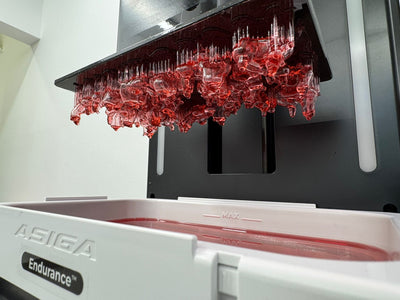
3D manufacturing
Ear impressions are digitally scanned, archived for future replacements, and transformed into precision 3D printed hearing protection products.
-
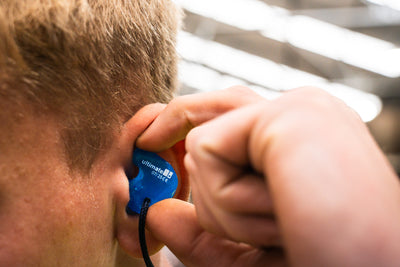
Enjoy long-lasting protection
Products are delivered to site in under 3
weeks, providing reliable hearing protection for up to 5 years.


